Reversing embedded WebAssembly: part 1. Cracking the WAMR .aot container in pure C.
﷽
Hello, cybersecurity enthusiasts and white hackers!
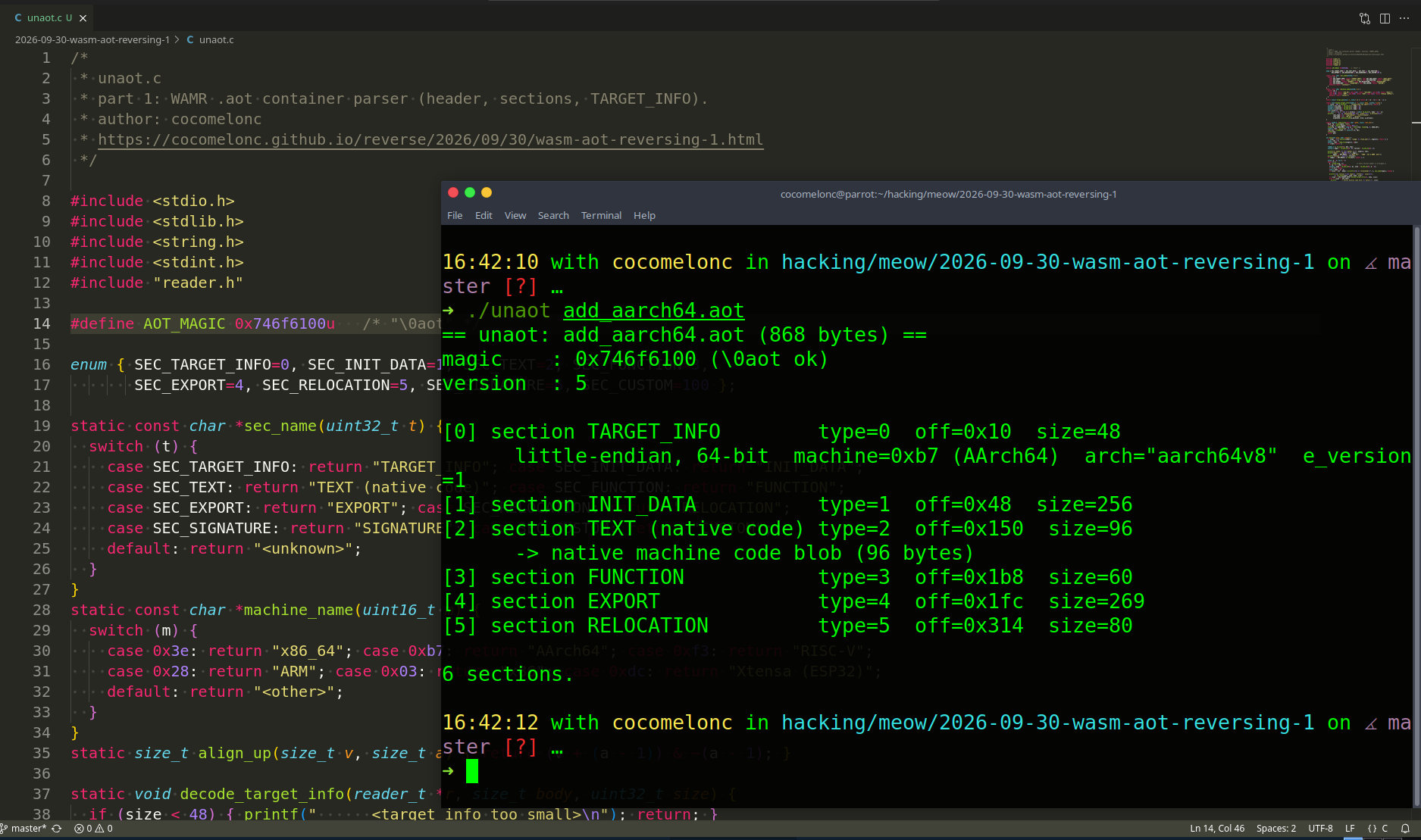
WebAssembly has quietly escaped the browser. On tiny devices - IoT sensors, edge gateways, automotive ECUs, even trusted execution environments - it now runs through small standalone engines, and the most popular of them is the WebAssembly Micro Runtime (WAMR), from the Bytecode Alliance. On a microcontroller you rarely ship a .wasm file and interpret it: it is too slow. Instead you run WAMR’s AOT compiler, wamrc, ahead of time and ship a .aot file - a native code blob wrapped in a WAMR-specific container.
And here is the interesting part for a reverse engineer. Plain .wasm is very well tooled - wabt, JEB, Ghidra loaders, half a dozen decompilers. The proprietary .aot container that actually lands on the device has no public tooling at all. If you pull one out of a firmware image, you are on your own.
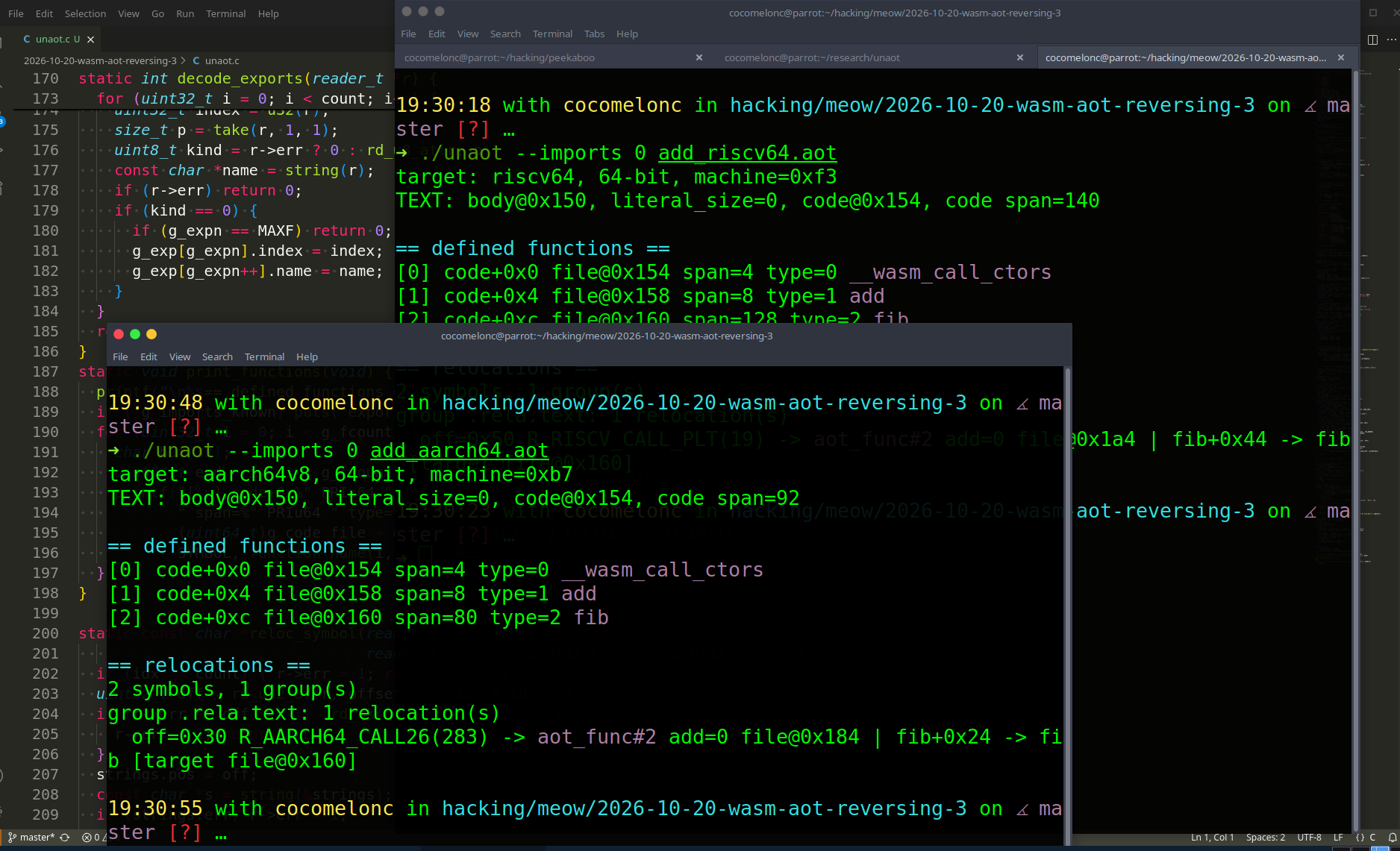
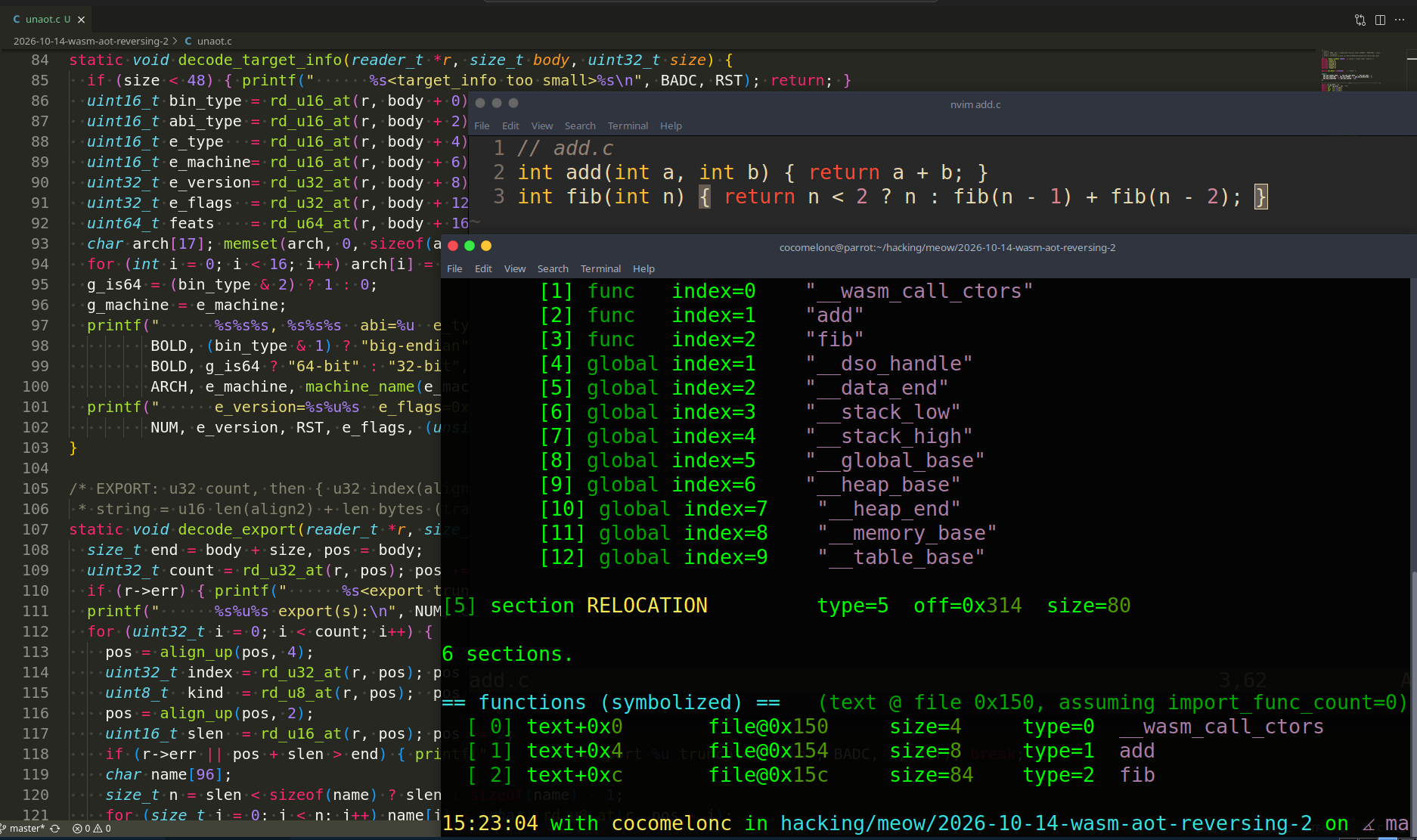
So over the next few posts we will build that tooling from scratch, in pure C, one tiny dependency-free file. I called it unaot. This part 1 does the foundation: we reverse the .aot container format from real bytes and write a parser that walks its sections and tells us the target architecture. Parts 2 and 3 will recover function names, cross-references and finally a Ghidra loader.
the idea
A .aot file is not WebAssembly bytecode. wamrc runs the same LLVM backend a normal compiler uses and emits native machine code for a concrete target (x86_64, aarch64, riscv, xtensa…), then wraps that code together with the metadata the runtime needs to load and relocate it: a target descriptor, initialization data, a function table, exports, and a relocation table.
For us that means the “star” of the analysis is native code - but you cannot even find it until you parse the container that surrounds it. That container is undocumented outside the WAMR source, so step one is simply to read it byte by byte. Everything else in this series stands on that.
practical example
Let’s produce a real .aot to look at. We do not need a full WAMR build - clang already has a WebAssembly backend, and the Bytecode Alliance ships a prebuilt wamrc in their releases. A two-function C file is enough:
// add.c
int add(int a, int b) { return a + b; }
int fib(int n) { return n < 2 ? n : fib(n - 1) + fib(n - 2); }
First grab wamrc itself. It is not in your package manager - the Bytecode Alliance publishes a prebuilt binary with every release, so we just download and unpack the one for our OS (here Linux x86_64; there are macOS and Windows builds on the same releases page):
curl -L -o wamrc.tar.gz \
  https://github.com/bytecodealliance/wasm-micro-runtime/releases/download/WAMR-2.4.5/wamrc-2.4.5-x86_64-ubuntu-22.04.tar.gz
tar xzf wamrc.tar.gz        # -> ./wamrc
./wamrc --version
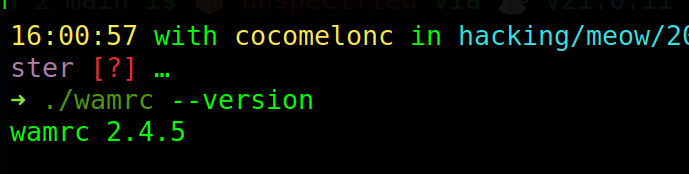
(If you prefer to build it from source, it lives in wamr-compiler/ in the WAMR tree and needs LLVM - the prebuilt binary is far quicker for just following along.) Now compile the C to a .wasm module, then to a .aot:
clang --target=wasm32 -O2 -nostdlib -Wl,--no-entry -Wl,--export-all -o add.wasm add.c
./wamrc -o add.aot add.wasm
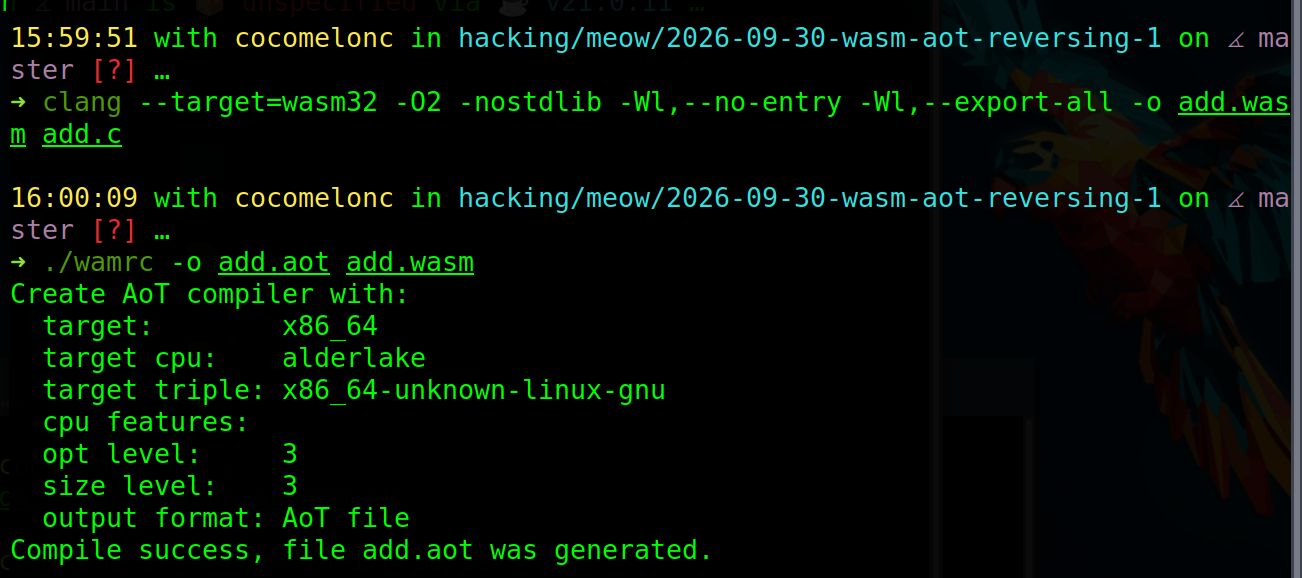
Now look at the first bytes of the result:
xxd -l 16 add.aot

There it is. The file starts with 00 61 6f74 - the ASCII string \0aot, a deliberate mirror of WebAssembly’s own \0asm magic. The four bytes after it, 05 00 00 00, are the format version - 5 for this wamrc. Then the sections begin.
the format
Cross-checking those bytes against WAMR’s core/config.h and core/iwasm/aot/aot_loader.c gives us the whole container. It is small and regular:
u32 magic     = 0x746f6100   ("\0aot")
u32 version
sections:  [ u32 type | u32 size | u8 body[size] ]   (repeated to EOF)
Each section is a type, a size, and a body of that many bytes. The type ids come straight from the runtime:
| id | section | contents |
|---|---|---|
| 0 | TARGET_INFO | arch / machine / endianness / word size |
| 1 | INIT_DATA | memory, table, globals, import info |
| 2 | TEXT | the native machine code |
| 3 | FUNCTION | per-function text offsets and type indices |
| 4 | EXPORT | exported names |
| 5 | RELOCATION | relocations to apply into TEXT / data |
| 6 | SIGNATURE | reserved |
| 100 | CUSTOM | custom (names, native symbols) |
There is one non-obvious rule that will bite you if you miss it. WAMR’s loader reads every multi-byte value through an alignment-aware macro that first rounds the pointer up to the field’s width. In practice this means every section header starts on a 4-byte boundary - the compiler inserts up to three padding bytes after a section body before the next header. Walk the file as a naive type, size, skip size loop and you desync on the very first odd-sized section. We will handle that with a single align_up(pos, 4).
The first section, TARGET_INFO, is the one we decode in part 1, because it tells us which CPU the TEXT code is for - without it the native blob is meaningless. Its 48-byte body is a fixed struct:
| off | type | field | notes |
|---|---|---|---|
| 0 | u16 | bin_type | bit0: big-endian; bit1: 64-bit |
| 2 | u16 | abi_type | |
| 4 | u16 | e_type | |
| 6 | u16 | e_machine | ELF machine id: 0x3e x86_64, 0xb7 aarch64, 0xf3 riscv… |
| 8 | u32 | e_version | |
| 12 | u32 | e_flags | |
| 16 | u64 | feature_flags | |
| 24 | u64 | reserved | |
| 32 | char[16] | arch | NUL-terminated, e.g. "x86_64", "aarch64v8", "riscv64" |
The e_machine field is just the ELF machine number, which is convenient - it is the same value you would read out of a normal ELF header, so once we have it we know exactly how to disassemble TEXT later.
Let’s look at the source code first. Two files. First a bounds-checked reader, reader.h. Every access is validated against the buffer end - this matters because .aot files come out of firmware you do not trust, and WAMR’s own AOT loader has had memory-safety CVEs. We never want our parser to be the second bug:
// reader.h - little-endian, bounds-checked
#include <stdint.h>
#include <stddef.h>

typedef struct { const uint8_t *base; size_t len, pos; int err; } reader_t;

static inline void rd_init(reader_t *r, const uint8_t *b, size_t n) {
  r->base = b; r->len = n; r->pos = 0; r->err = 0;
}
static inline int rd_ok(const reader_t *r, size_t off, size_t n) {
  return off <= r->len && n <= r->len - off;   /* no overflow */
}
static inline uint16_t rd_u16_at(reader_t *r, size_t o) {
  if (!rd_ok(r, o, 2)) { r->err = 1; return 0; }
  return (uint16_t)(r->base[o] | (r->base[o + 1] << 8));
}
static inline uint32_t rd_u32_at(reader_t *r, size_t o) {
  if (!rd_ok(r, o, 4)) { r->err = 1; return 0; }
  return (uint32_t)(r->base[o] | ((uint32_t)r->base[o+1] << 8)
                    | ((uint32_t)r->base[o+2] << 16) | ((uint32_t)r->base[o+3] << 24));
}
static inline uint64_t rd_u64_at(reader_t *r, size_t o) {
  if (!rd_ok(r, o, 8)) { r->err = 1; return 0; }
  return (uint64_t)rd_u32_at(r, o) | ((uint64_t)rd_u32_at(r, o + 4) << 32);
}
static inline uint8_t rd_u8_at(reader_t *r, size_t o) {
  if (!rd_ok(r, o, 1)) { r->err = 1; return 0; }
  return r->base[o];
}
The one idea here is rd_ok: it checks n <= r->len - off only after confirming off <= r->len, so the subtraction can never wrap around. A malformed section size can set err, but it can never make us read out of bounds.
Now the parser, unaot.c. The constants and the two little lookup tables first:
#include <stdio.h>
#include <stdlib.h>
#include <string.h>
#include <stdint.h>
#include "reader.h"

#define AOT_MAGIC 0x746f6100u   /* "\0aot" */

enum { SEC_TARGET_INFO=0, SEC_INIT_DATA=1, SEC_TEXT=2, SEC_FUNCTION=3,
       SEC_EXPORT=4, SEC_RELOCATION=5, SEC_SIGNATURE=6, SEC_CUSTOM=100 };

static const char *sec_name(uint32_t t) {
  switch (t) {
    case SEC_TARGET_INFO: return "TARGET_INFO"; case SEC_INIT_DATA: return "INIT_DATA";
    case SEC_TEXT: return "TEXT (native code)"; case SEC_FUNCTION: return "FUNCTION";
    case SEC_EXPORT: return "EXPORT"; case SEC_RELOCATION: return "RELOCATION";
    case SEC_SIGNATURE: return "SIGNATURE"; case SEC_CUSTOM: return "CUSTOM";
    default: return "<unknown>";
  }
}
static const char *machine_name(uint16_t m) {
  switch (m) {
    case 0x3e: return "x86_64"; case 0xb7: return "AArch64"; case 0xf3: return "RISC-V";
    case 0x28: return "ARM"; case 0x03: return "x86"; case 0xdc: return "Xtensa (ESP32)";
    default: return "<other>";
  }
}
static size_t align_up(size_t v, size_t a) { return (v + (a - 1)) & ~(a - 1); }
Decoding TARGET_INFO is a direct transcription of the struct above:
static void decode_target_info(reader_t *r, size_t body, uint32_t size) {
  if (size < 48) { printf("      <target_info too small>\n"); return; }
  uint16_t bin_type  = rd_u16_at(r, body + 0);
  uint16_t e_machine = rd_u16_at(r, body + 6);
  uint32_t e_version = rd_u32_at(r, body + 8);
  char arch[17] = {0};
  for (int i = 0; i < 16; i++) arch[i] = (char) rd_u8_at(r, body + 32 + i);
  printf("      %s, %s  machine=0x%02x (%s)  arch=\"%s\"  e_version=%u\n",
         (bin_type & 1) ? "big-endian" : "little-endian",
         (bin_type & 2) ? "64-bit" : "32-bit",
         e_machine, machine_name(e_machine), arch, e_version);
}
And main ties it together: slurp the file, verify the magic, then walk the section table - aligning to 4 before every header, and clamping every size against the buffer so a corrupt .aot degrades gracefully instead of crashing:
static uint8_t *read_file(const char *path, size_t *out_len) {
  FILE *fp = fopen(path, "rb");
  if (!fp) { perror(path); return NULL; }
  fseek(fp, 0, SEEK_END); long sz = ftell(fp); fseek(fp, 0, SEEK_SET);
  uint8_t *buf = malloc(sz > 0 ? sz : 1);
  *out_len = fread(buf, 1, (size_t) sz, fp);
  fclose(fp);
  return buf;
}

int main(int argc, char **argv) {
  if (argc < 2) { fprintf(stderr, "usage: %s <file.aot>\n", argv[0]); return 2; }
  size_t len = 0;
  uint8_t *buf = read_file(argv[1], &len);
  if (!buf) return 1;

  reader_t r; rd_init(&r, buf, len);
  uint32_t magic = rd_u32_at(&r, 0), version = rd_u32_at(&r, 4);

  printf("== unaot: %s (%zu bytes) ==\n", argv[1], len);
  printf("magic    : 0x%08x %s\n", magic,
         magic == AOT_MAGIC ? "(\\0aot ok)" : "(BAD - not a WAMR .aot)");
  printf("version  : %u\n\n", version);
  if (magic != AOT_MAGIC) { free(buf); return 1; }

  size_t p = 8; int n = 0;
  while (1) {
    p = align_up(p, 4);                 /* every section header is 4-aligned */
    if (p + 8 > len) break;
    uint32_t type = rd_u32_at(&r, p), size = rd_u32_at(&r, p + 4);
    if (r.err) break;
    size_t body = p + 8;
    if (size > len - body) { printf("[%d] %s <truncated>\n", n, sec_name(type)); break; }

    printf("[%d] section %-18s type=%u  off=0x%zx  size=%u\n",
           n, sec_name(type), type, body, size);
    if (type == SEC_TARGET_INFO) decode_target_info(&r, body, size);
    else if (type == SEC_TEXT)
      printf("      -> native machine code blob (%u bytes)\n", size);

    p = body + size; n++;
  }
  printf("\n%d sections.\n", n);
  free(buf);
  return 0;
}
That is the entire (for part 1, I will planning to write new parts with full features) tool - one header, one .c, no libraries.
Full source code:
/*
 * unaot.c
 * part 1: WAMR .aot container parser (header, sections, TARGET_INFO).
 * author: cocomelonc
 * https://cocomelonc.github.io/reverse/2026/09/30/wasm-aot-reversing-1.html
 */

#include <stdio.h>
#include <stdlib.h>
#include <string.h>
#include <stdint.h>
#include "reader.h"

#define AOT_MAGIC 0x746f6100u   /* "\0aot" */

enum { SEC_TARGET_INFO=0, SEC_INIT_DATA=1, SEC_TEXT=2, SEC_FUNCTION=3,
       SEC_EXPORT=4, SEC_RELOCATION=5, SEC_SIGNATURE=6, SEC_CUSTOM=100 };

static const char *sec_name(uint32_t t) {
  switch (t) {
    case SEC_TARGET_INFO: return "TARGET_INFO"; case SEC_INIT_DATA: return "INIT_DATA";
    case SEC_TEXT: return "TEXT (native code)"; case SEC_FUNCTION: return "FUNCTION";
    case SEC_EXPORT: return "EXPORT"; case SEC_RELOCATION: return "RELOCATION";
    case SEC_SIGNATURE: return "SIGNATURE"; case SEC_CUSTOM: return "CUSTOM";
    default: return "<unknown>";
  }
}
static const char *machine_name(uint16_t m) {
  switch (m) {
    case 0x3e: return "x86_64"; case 0xb7: return "AArch64"; case 0xf3: return "RISC-V";
    case 0x28: return "ARM"; case 0x03: return "x86"; case 0xdc: return "Xtensa (ESP32)";
    default: return "<other>";
  }
}
static size_t align_up(size_t v, size_t a) { return (v + (a - 1)) & ~(a - 1); }

static void decode_target_info(reader_t *r, size_t body, uint32_t size) {
  if (size < 48) { printf("      <target_info too small>\n"); return; }
  uint16_t bin_type  = rd_u16_at(r, body + 0);
  uint16_t e_machine = rd_u16_at(r, body + 6);
  uint32_t e_version = rd_u32_at(r, body + 8);
  char arch[17] = {0};
  for (int i = 0; i < 16; i++) arch[i] = (char) rd_u8_at(r, body + 32 + i);
  printf("      %s, %s  machine=0x%02x (%s)  arch=\"%s\"  e_version=%u\n",
         (bin_type & 1) ? "big-endian" : "little-endian",
         (bin_type & 2) ? "64-bit" : "32-bit",
         e_machine, machine_name(e_machine), arch, e_version);
}

static uint8_t *read_file(const char *path, size_t *out_len) {
  FILE *fp = fopen(path, "rb");
  if (!fp) { perror(path); return NULL; }
  fseek(fp, 0, SEEK_END); long sz = ftell(fp); fseek(fp, 0, SEEK_SET);
  uint8_t *buf = malloc(sz > 0 ? sz : 1);
  *out_len = fread(buf, 1, (size_t) sz, fp);
  fclose(fp);
  return buf;
}

int main(int argc, char **argv) {
  if (argc < 2) { fprintf(stderr, "usage: %s <file.aot>\n", argv[0]); return 2; }
  size_t len = 0;
  uint8_t *buf = read_file(argv[1], &len);
  if (!buf) return 1;

  reader_t r; rd_init(&r, buf, len);
  uint32_t magic = rd_u32_at(&r, 0), version = rd_u32_at(&r, 4);

  printf("== unaot: %s (%zu bytes) ==\n", argv[1], len);
  printf("magic    : 0x%08x %s\n", magic,
         magic == AOT_MAGIC ? "(\\0aot ok)" : "(BAD - not a WAMR .aot)");
  printf("version  : %u\n\n", version);
  if (magic != AOT_MAGIC) { free(buf); return 1; }

  size_t p = 8; int n = 0;
  while (1) {
    p = align_up(p, 4);                 /* every section header is 4-aligned */
    if (p + 8 > len) break;
    uint32_t type = rd_u32_at(&r, p), size = rd_u32_at(&r, p + 4);
    if (r.err) break;
    size_t body = p + 8;
    if (size > len - body) { printf("[%d] %s <truncated>\n", n, sec_name(type)); break; }

    printf("[%d] section %-18s type=%u  off=0x%zx  size=%u\n",
           n, sec_name(type), type, body, size);
    if (type == SEC_TARGET_INFO) decode_target_info(&r, body, size);
    else if (type == SEC_TEXT)
      printf("      -> native machine code blob (%u bytes)\n", size);

    p = body + size; n++;
  }
  printf("\n%d sections.\n", n);
  free(buf);
  return 0;
}
demo
Build it and point it at our add.aot:
cc -std=c11 -O2 -Wall -o unaot unaot.c
./unaot add.aot
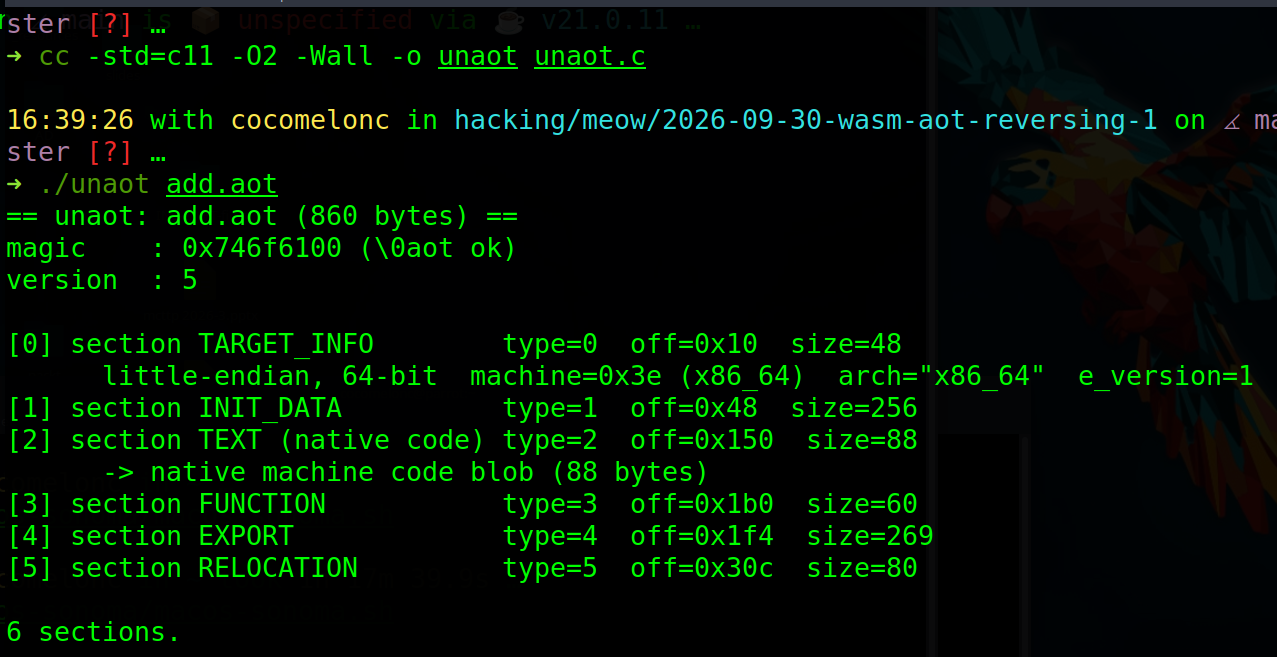
Six sections, ending exactly at end of file - proof the alignment handling is correct. We now know this blob is x86_64, that its native code lives at file offset 0x150 and is 88 bytes long, and where every other section sits.
The nicest part is that none of this is architecture-specific. Re-target the same module with
wamrc --target=aarch64 -o add_aarch64.aot add.wasm
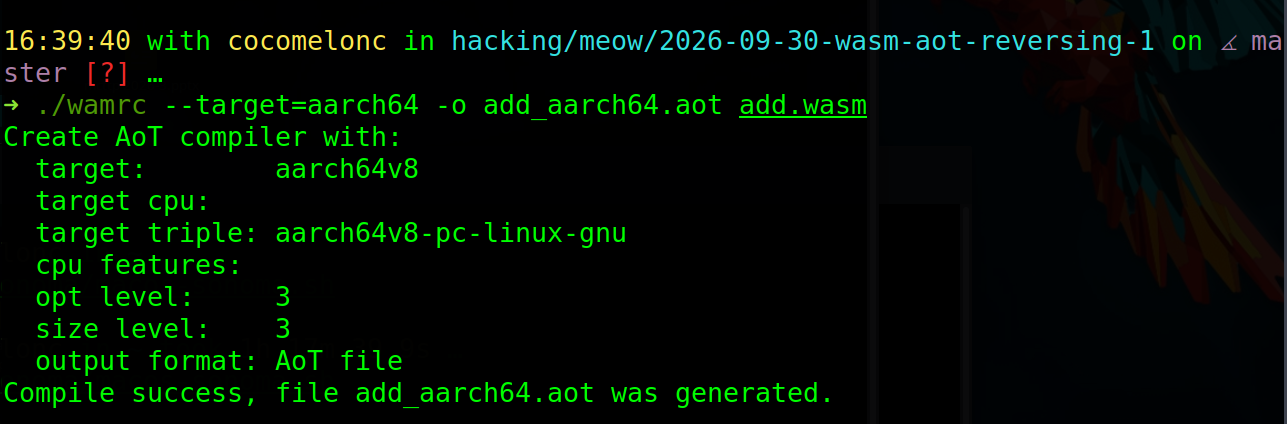
and run unaot again:
./unaot add_aarch64.aot
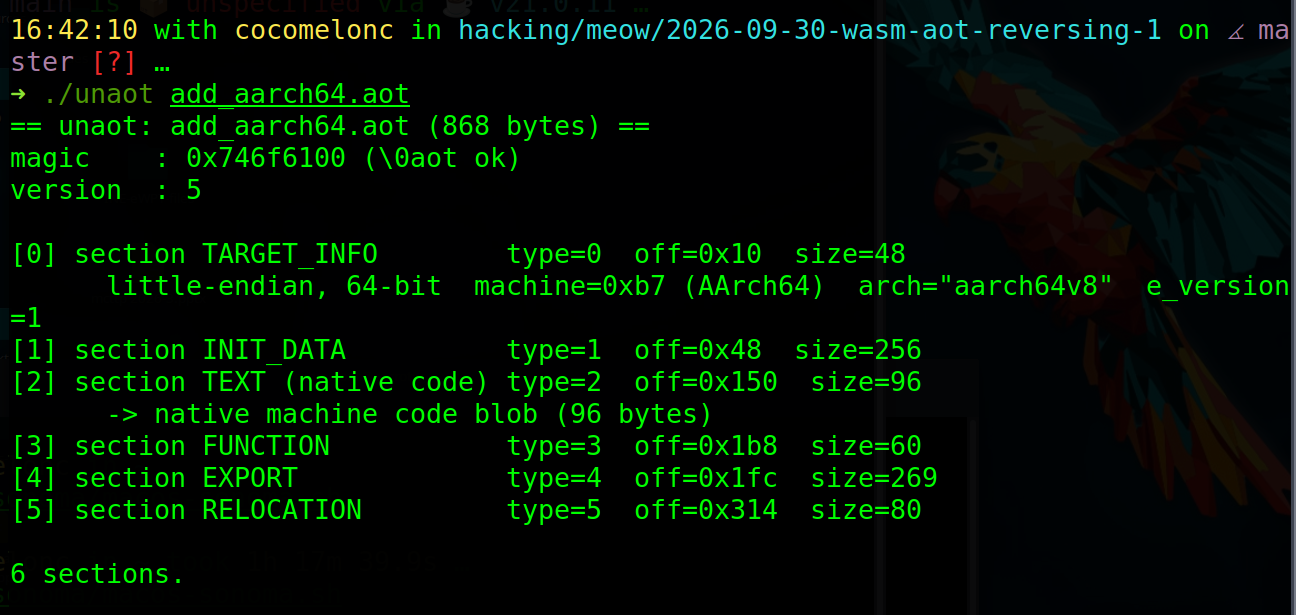
Same parser, different CPU - because the container is identical across targets and only TARGET_INFO changes. The same holds for riscv64 and 32-bit arm.
summary
| piece | what it does |
|---|---|
reader.h |
little-endian reads that can set an error but never overrun |
| magic + version check | confirm \0aot, capture the format version |
| section walk | type / size / body, 4-byte aligned, size-clamped |
decode_target_info() |
arch, endianness, word size, ELF machine id |
One honest caveat before we move on: the .aot format is versioned and strict. A WAMR runtime loads only .aot files whose version equals its own, and the layout of the inner sections changes between versions. Version 5 is what a current wamrc emits, but the version you will most often meet in real, already-deployed firmware is 3 - it covers WAMR 1.0.0 all the way to 2.2.x. Happily, the container, the section ids and this whole TARGET_INFO struct are byte-identical from version 3 to 6, so everything in part 1 already generalizes. The differences live deeper, in the function and relocation bodies - which is exactly where we are going next.
In the next part we decode the FUNCTION and EXPORT sections, turn the raw TEXT blob into a symbolized function table - every native function mapped to its name and offset - and add colored output, still in one small C file.
I hope this post with a practical example is useful for reverse engineers, embedded and IoT security researchers, and everyone curious about how WebAssembly really ships on devices.
WebAssembly Micro Runtime (WAMR)
WAMR AOT compiler (wamrc) and prebuilt releases
WebAssembly core specification
Bytecode Alliance - WAMR 2024 in review
source code in github - part 1
This is a practical case for educational purposes only.
Thanks for your time happy hacking and good bye! PS. All drawings and screenshots are mine